
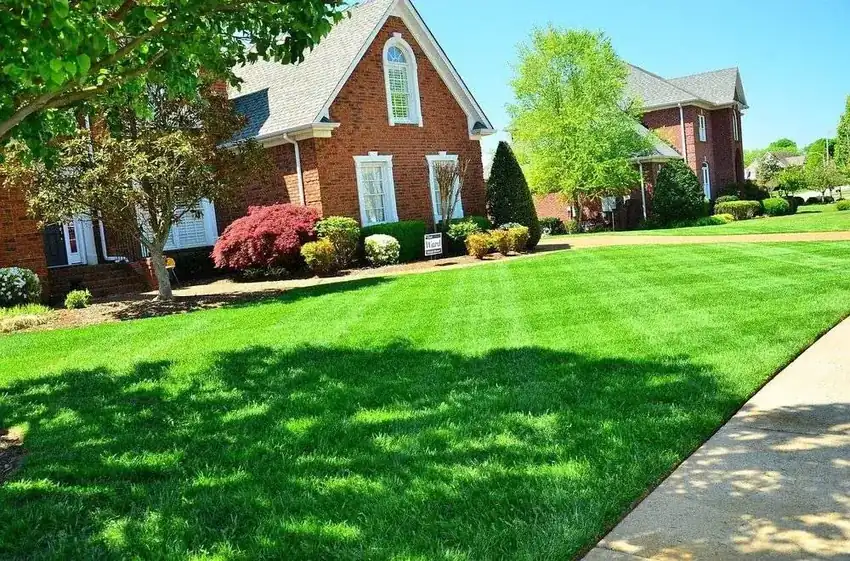
How to Winterize Your Lawn in Northern Virginia
Fall steps that set your lawn up for a strong spring.
How to Winterize Your Lawn in Northern Virginia
What you do in the fall decides how your lawn looks next spring. Cool-season grasses in Northern Virginia do most of their root-building in autumn, so a little effort now pays off for months. Here is a simple end-of-season routine.
Keep Mowing, Then Lower the Last Cut
Do not stop mowing too early. Keep cutting until the grass stops growing, then drop the deck slightly for the final mow of the year. A shorter final height reduces matting and snow mold over winter.
Clear the Leaves
A thick leaf layer smothers grass and traps moisture that leads to disease. Regular leaf cleanup keeps light and air reaching the lawn. Shredded leaves in thin layers can be left as free organic matter, but heavy piles should be removed.
Aerate and Overseed
Early fall is the ideal time to relieve compaction and thicken thin spots. Core aeration opens the soil so water, air, and nutrients reach the roots, and overseeding fills in bare patches before winter.
Protect Your Irrigation
- Shut down and blow out sprinkler lines before the first hard freeze to prevent burst pipes.
- Drain and store hoses.
- Note any dry or soggy areas to address in spring.
Sprinkler winterization is easy to forget and expensive to skip. If you would rather have the whole fall routine handled, our winterization service covers it.
The Case for a Fall Feeding
A late-fall application of fertilizer is one of the most valuable things you can do for a cool-season lawn. As top growth slows, the grass shifts its energy into the roots, and a fall feeding fuels that root development and stores energy for a fast, green spring. Timing matters: apply while the grass is still green and growing slowly, not after it has gone dormant. Skipping this step is a missed opportunity that shows up as a slower, patchier lawn the following April.
Traffic, Salt, and Snow
Dormant winter grass is fragile. Try to keep foot traffic and parked equipment off frozen or snow-covered turf, since crushed crowns are slow to recover in spring. If you use de-icing salt on walks and driveways, be aware that runoff can burn nearby grass and damage soil; sand or calcium-based products are gentler on the landscape. When you shovel or plow, avoid piling salty snow onto lawn areas. A little care through the winter months means far less repair and reseeding once the ground thaws.
A Quick Fall Checklist
To pull it together: keep mowing until growth stops and lower the final cut slightly; clear leaves so they do not smother the grass; aerate and overseed in early fall while roots are active; apply a late-fall feeding before dormancy; and blow out and shut down your irrigation before the first hard freeze. Handle those five things and your lawn heads into winter strong and comes out of it thick and green, weeks ahead of a neglected yard. Miss them and spring becomes a repair project instead of a fresh start.
Want a hand from a local crew? 66 Landscaping serves Northern Virginia with free, no-pressure estimates. Call or text (703) 568-9644 or request an estimate online.
Ready to Get Started?
Free, no-pressure estimates across Northern Virginia.
Call (703) 568-9644 Request Estimate