
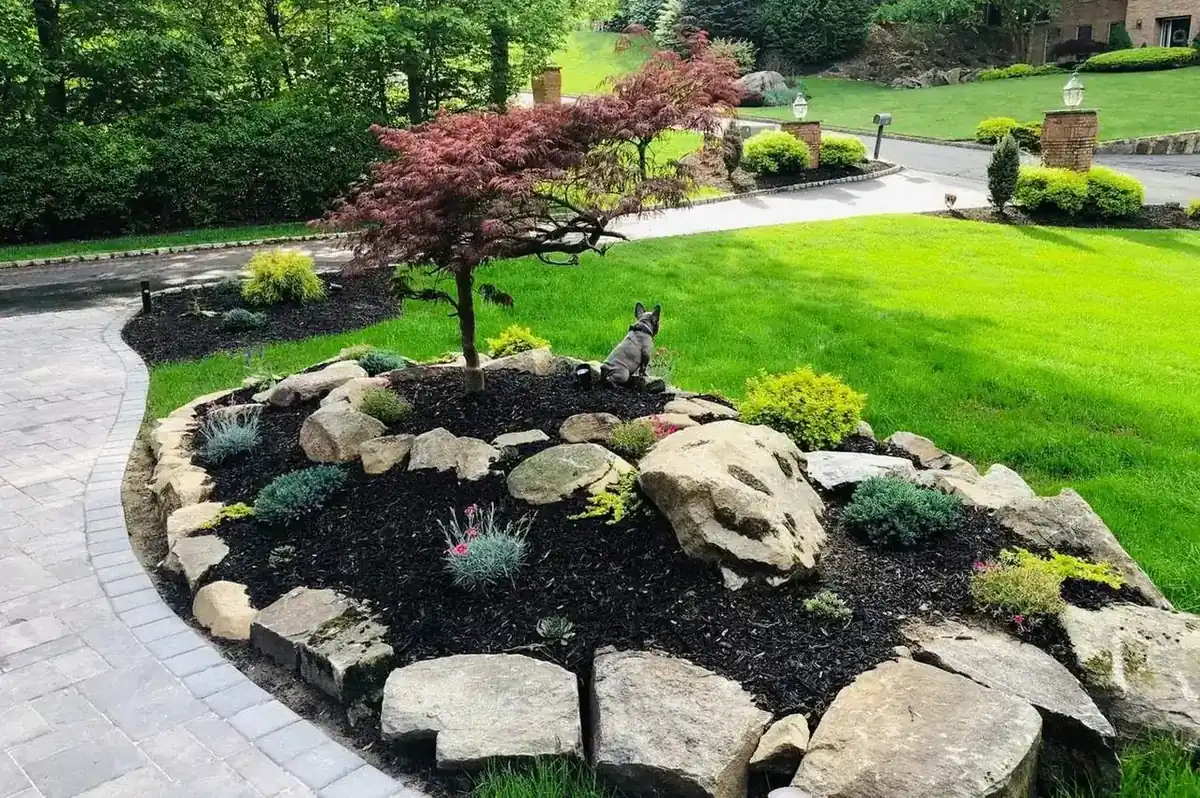
Preparing Your Irrigation and Hardscape for Winter
October 8, 2026
A little work before the first hard freeze protects the money you have put into your yard. In Northern Virginia, winter is not about deep, steady cold. It is about cycles: a hard freeze one night, a thaw the next afternoon, then rain and another freeze. Those swings are tough on irrigation lines, concrete, pavers, and walls. A few fall steps now save you from the repair calls we see every spring.
Winterize the Sprinkler System
This is the most important item on the list. Water left in irrigation lines, valves, and the backflow preventer can freeze, expand, and crack pipes and fittings. You will not know anything is wrong until you turn the system on in April and find a geyser in the front yard or a split backflow device spraying the side of the house.
Proper winterization means shutting off the water supply to the system, draining the backflow preventer, and blowing out each zone with compressed air until only mist comes out of the heads. It is quick for a professional and far cheaper than repairing burst lines in spring. We schedule winterization from late October through mid-November, ahead of the first hard freeze. Doing it a little early is not a problem, but waiting until after a cold snap is a gamble.
A few related items while you are at it:
- Disconnect garden hoses from outdoor spigots so water can drain out of the faucet.
- If your outdoor faucets are not frost-free and have an indoor shutoff, close it and drain the line.
- Make a note of broken heads, leaks, or dry spots from this season so they can be fixed before spring startup.
Our sprinkler system maintenance checklist covers the rest of the year.
Protect Concrete and Pavers
Moisture is what does the damage. Water soaks into concrete and paver surfaces, freezes, and expands, which leads to flaking, spalling, and surface cracks over time. De-icing salt makes it worse by drawing in more moisture and attacking the surface.
- Seal before the cold arrives. Sealers need dry weather and mild temperatures to apply and cure properly (many labels call for 50°F or warmer), so September and early October are ideal. Sealed stamped concrete and pavers shed water and resist salt much better than bare surfaces.
- Go easy on de-icers. Rock salt is hard on concrete, especially concrete poured within the past year. Use sand for traction where you can, and choose products labeled safe for concrete when you need melting power.
- Use the right shovel. Plastic shovels and blades are much gentler on stamped finishes and sealed pavers than metal edges.
- Fill paver joints. Top off joint sand where it has washed out so water does not sit between pavers and freeze.
If you already see cracks or flaking, have them looked at before winter widens them. Our concrete maintenance service covers cleaning, sealing, and small repairs.
Keep Water Moving Away from the House
Winter drainage problems usually start in fall. Once the leaves are down, clean the gutters and make sure downspouts discharge several feet away from the foundation, not into a bed right next to it. Clear leaves and debris out of yard drains, catch basins, and the drain outlets at the base of retaining walls. Water that backs up behind a wall and freezes adds pressure the wall was never designed to carry.
Take a walk around the property after a fall rain. Puddles against the foundation, on the patio, or at the bottom of a slope show you exactly where meltwater will pool and refreeze into ice this winter. Those are the spots to fix first, and they are much easier to address now than in January.
Put the Lawn and Beds to Bed
The lawn needs some attention too. Keep mowing tall fescue until it stops growing, and keep leaves off the grass so they do not mat down over winter. A late fall feeding helps cool-season grass build roots and green up sooner in spring. In the beds, a fresh layer of mulch insulates roots against freeze and thaw swings, and newly planted trees and shrubs should get a deep watering before the ground freezes. Our guide on how to winterize your lawn in Northern Virginia goes through it step by step.
Handle these jobs before the cold sets in and your yard comes through winter ready for spring, with fewer surprise repair bills waiting for you in April.
66 Landscaping serves Northern Virginia with free, no-pressure estimates. Call or text (703) 568-9644 to book your sprinkler winterization or fall hardscape sealing. You can also request an estimate online.
More From the Blog
Snow and Ice: What to Expect from a Reliable Removal Service
Northern Virginia winters are hard to predict. Some years bring one or two big storms. Others bring mostly ice, sleet,…
Curb Appeal Upgrades That Pay Off Before You Sell
If selling your home is on the horizon, the yard is the first thing buyers see. Most buyers start their…
Fall Color: Best Trees and Shrubs for Northern Virginia Yards
Fall is one of the most rewarding seasons in a Northern Virginia landscape, and the right plant choices turn an…
Ready to Get Started?
Free, no-pressure estimates across Northern Virginia.
Call (703) 568-9644 Request Estimate