Five Signs a Tree Needs to Be Removed
Knowing when a tree has become a risk to your property.
Five Signs a Tree Needs to Be Removed
A mature tree is an asset, but a failing one is a hazard hanging over your roof, cars, and family. Removal is a last resort, yet sometimes it is the safe and responsible choice. Watch for these warning signs.
1. Large Dead or Hanging Branches
Dead limbs, especially big ones over a house or driveway, can fall without warning. A few dead branches can be pruned, but widespread dieback in the canopy is a bad sign.
2. a Leaning Trunk
A tree that suddenly leans, or shows heaving soil and exposed roots on one side, may be losing its anchor. A new lean after a storm is especially concerning.
3. Cracks, Cavities, and Soft Wood
Deep vertical cracks, large cavities, or soft, crumbling wood point to internal decay that weakens the whole structure.
4. Fungus at the Base
Mushrooms or conks growing at the root flare often signal root rot, which quietly undermines stability.
5. Too Close to Structures or Power Lines
- Roots threatening the foundation or septic system.
- Limbs tangled in power lines.
- A species that has simply outgrown its spot.
Not every troubled tree needs to come down. A professional tree assessment can tell you whether pruning will do, or whether tree removal is the safer path. See our full arbor care services.
Can It Be Saved Instead?
Removal is permanent, so it is worth asking whether pruning, cabling, or treatment could save a tree first. A few dead limbs, a treatable pest, or a correctable lean on a young tree often do not warrant removal. A certified arborist can assess the root flare, canopy, and trunk and give you an honest read on whether a tree is a hazard or simply needs care. Mature, healthy trees add real value and shade to a property, so the goal is always to keep the ones that can be kept safely.
Why DIY Removal Is Risky
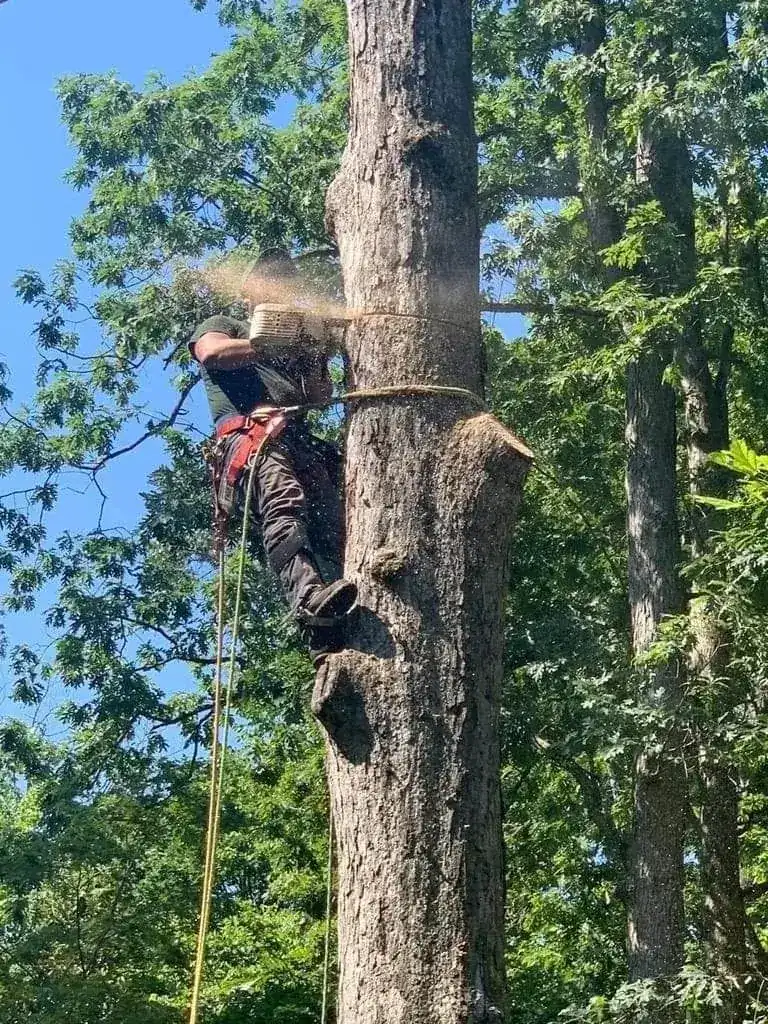
Taking down anything larger than a small ornamental is genuinely dangerous work. Trees are heavy and unpredictable, especially when they are dead or leaning, and add a chainsaw, a ladder, and nearby structures or power lines and the risk climbs fast. Professionals use rigging, proper cutting sequences, and insurance to bring a tree down in a controlled way. If a tree is near your home, a fence, or utility lines, or if it is large or compromised, it is not a weekend project. Getting an assessment costs nothing and could prevent an expensive or serious accident.
After Removal: The Stump
Taking the tree down is only part of the job; the stump remains. Left in place it can sprout, attract insects and decay, and get in the way of mowing or new plantings. Grinding removes it below grade so you can plant grass or a bed over the spot, while full extraction is more involved and disturbs more soil. If you are removing a tree to make room for something new, plan the stump work at the same time. A professional can handle removal and stump grinding together so you finish with a clean, usable space.
Want a hand from a local crew? 66 Landscaping serves Northern Virginia with free, no-pressure estimates. Call or text (703) 568-9644 or request an estimate online.
Ready to Get Started?
Free, no-pressure estimates across Northern Virginia.
Call (703) 568-9644 Request Estimate