
Drought-Smart Watering Tips for Northern Virginia Summers
October 8, 2026
Northern Virginia summers bring heat, humidity, and the occasional dry stretch of two or three weeks that can stress a lawn fast. Add clay soil that sheds water when it is dry and holds it when it is wet, and watering gets trickier than it looks. The good news is that a few smart habits keep a landscape healthy through August while using less water and lowering your bill.
Water Deeply and Less Often
This is the rule that matters most. A long, infrequent soak drives water, and roots, deep into the soil where it stays cooler and moister. Daily light sprinkling keeps roots in the top inch or two, where they cook on the first 95°F afternoon.
For an established tall fescue lawn, aim for about 1 inch of water per week, counting rainfall, delivered in one or two sessions. To find out how long that takes, set a few empty tuna cans or other straight-sided containers around the lawn, run your sprinklers, and time how long it takes to collect an inch. Most homeowners are surprised by the answer.
If you cannot water, or your water provider has restrictions in place, it is fine to let tall fescue go dormant. It will turn tan and stop growing, but a healthy lawn usually recovers when rain and cooler weather return. What hurts it is going back and forth: watering just enough to green it up, then letting it dry out again. Pick one approach and stick with it, and keep foot traffic off dormant turf.
Work with Clay Soil, Not Against It
Clay absorbs water slowly. Run a sprinkler for 40 minutes straight and much of that water runs off onto the driveway and into the storm drain. The fix is cycle and soak: split each watering into two or three shorter runs with 30 to 60 minutes in between so the water has time to sink in. Most irrigation controllers can be set up this way, and it makes a noticeable difference on slopes.
Fall core aeration helps too. It opens channels into compacted clay so water and roots can reach deeper the following summer.
Get the Timing and Mowing Right
Water early in the morning, ideally finishing by 8am. Less water is lost to evaporation and wind, and the grass dries quickly once the sun comes up. Evening watering leaves the lawn wet overnight, which in our humid summers is an open invitation to brown patch, a fungal disease that hits tall fescue hard in hot, muggy weather.
Mowing height is the other half of the equation. Raise the mower to 3.5 to 4 inches for summer. Taller grass shades the soil, keeps it cooler, and supports deeper roots. Never take off more than a third of the blade at once, and keep mower blades sharp so the grass is cut cleanly instead of torn. Our guide on grass cutting height in Northern Virginia covers this in more detail.
Beds, Trees, and New Plantings
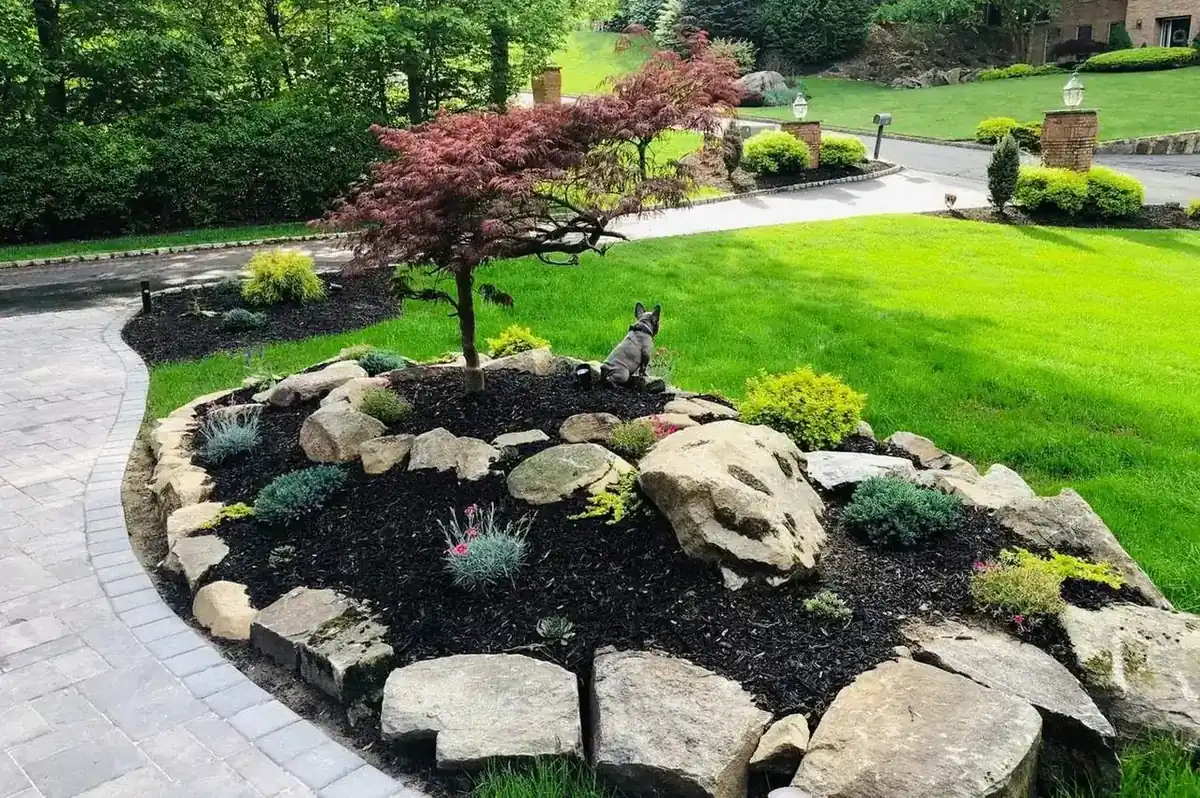
Shrubs and perennials do better with water delivered at the roots than with overhead spray. Drip irrigation puts water right where it is needed with very little evaporation, and it keeps foliage dry. A 2 to 3 inch layer of mulch over the beds slows evaporation and keeps roots cooler.
Group plants by water needs so you are not overwatering a drought-tolerant shrub to keep a thirsty one alive. Anything planted in the last year or two needs extra attention during a dry spell, since its roots have not spread into the surrounding soil yet. Established trees benefit from a slow, deep soak under the outer edge of the canopy every week or two during a drought.
If you are tired of fighting the same dry corner every summer, xeriscaping with drought-tolerant natives and decorative rock can take that area almost entirely off the watering schedule.
Let Your System Do the Work
An efficient irrigation system with a smart or weather-based controller adjusts run times based on temperature and rainfall, so you are not watering during a thunderstorm or the morning after a soaking rain. Paired with a rain sensor and zones set up separately for sun and shade, and for lawn and beds, it handles deep, infrequent watering automatically and can trim summer usage noticeably.
Older systems drift out of adjustment over time. If your heads water the sidewalk, leave dry patches, mist instead of spray, or run during rain, an irrigation efficiency checkup usually pays for itself. We check pressure, coverage, and head alignment, fix what is broken, and reprogram the controller to match the season.
66 Landscaping serves Northern Virginia with free, no-pressure estimates. Call or text (703) 568-9644 to set up an irrigation checkup before the next dry spell. You can also request an estimate online.
More From the Blog
Snow and Ice: What to Expect from a Reliable Removal Service
Northern Virginia winters are hard to predict. Some years bring one or two big storms. Others bring mostly ice, sleet,…
Curb Appeal Upgrades That Pay Off Before You Sell
If selling your home is on the horizon, the yard is the first thing buyers see. Most buyers start their…
Preparing Your Irrigation and Hardscape for Winter
A little work before the first hard freeze protects the money you have put into your yard. In Northern Virginia,…
Ready to Get Started?
Free, no-pressure estimates across Northern Virginia.
Call (703) 568-9644 Request Estimate