
Spring Cleanup: Getting Your Northern Virginia Yard Ready
October 8, 2026
Winter in Northern Virginia is not brutal, but it is messy. Freeze and thaw cycles heave soil, storms drop limbs, and the leaves that blew in after the last fall cleanup end up matted into the lawn and beds. A good spring cleanup resets the property so the lawn and plants can wake up on schedule instead of fighting through debris.
Start with Debris and Matted Leaves
The first pass is all about clearing. Fallen branches, sticks, and wet leaves come off the lawn and out of the beds. Matted leaves are the real problem. They block sunlight, hold moisture against the grass blades, and create the damp conditions where fungal diseases get started. A light rake, or a leaf blower on a low setting, usually lifts them without tearing up the turf.
Wait until the ground firms up before you start walking and raking heavily. Our clay soils stay soft and wet well into spring, and working them when they are saturated compacts the soil and leaves ruts and footprints that last for weeks. If a handful of soil squeezes into a sticky ball, give it a few more dry days. For bigger messes after a storm, our debris cleanup crews can haul everything away in one visit.
Cut Back, Edge, and Mulch the Beds
Next we move to the planting beds. Spent perennials and ornamental grasses get cut back to make room for new growth. Liriope and most ornamental grasses should come down before the new shoots emerge, usually by mid-March, so you are not trimming off the fresh green tips.
Be careful with shrubs. Azaleas, forsythia, lilacs, and other spring bloomers set their flower buds last summer, so pruning them now cuts off this year’s flowers. Prune those right after they finish blooming instead. Summer bloomers like crape myrtles and panicle hydrangeas can be shaped in late winter or early spring.
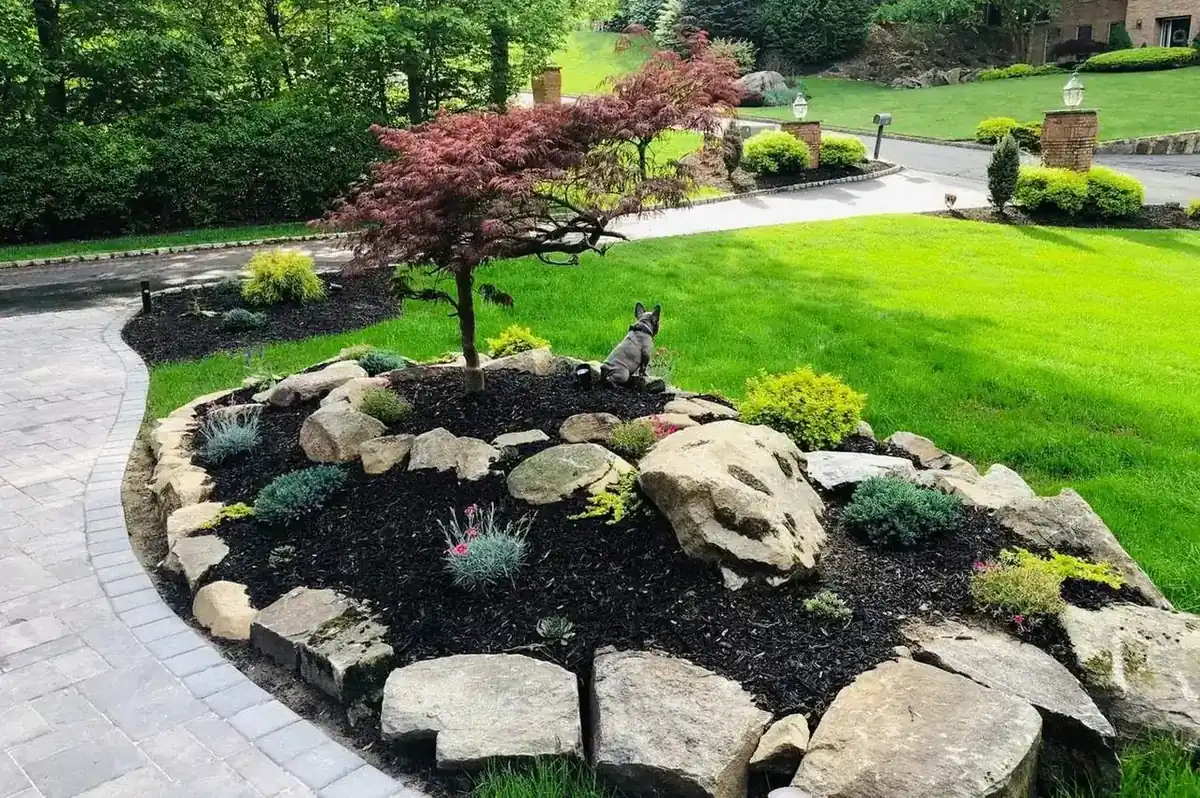
Once the beds are clean, cut a crisp edge between bed and lawn, pull any early weeds, and top off the mulch. A layer of 2 to 3 inches is plenty. Keep it pulled back a few inches from tree trunks and shrub stems, since mulch piled against bark holds moisture and invites rot and pests.
Wake Up the Lawn the Right Way
Most lawns in our area are tall fescue, a cool-season grass that does its best growing in spring and fall. Spring lawn care is mostly about supporting that growth without setting up summer problems.
- Crabgrass prevention: A pre-emergent applied in early spring, roughly when the forsythia blooms and soil temperatures approach 55°F, stops crabgrass before it sprouts.
- Dethatching: If you have more than about half an inch of spongy thatch, a light dethatching lets water and air reach the soil.
- Aeration: Clay compacts easily, especially along walkways and play areas. Core aeration pulls plugs of soil so roots can breathe. Fall is the main aeration season for fescue, but a spring pass helps badly compacted lawns.
- Feeding: Hold off on fertilizer until the grass is actively growing and you have mowed once or twice. A light spring feeding is enough. Heavy spring nitrogen pushes soft top growth that struggles in July heat.
Spring vs. Fall Overseeding
Thin spots are tempting to fix right away, and spring overseeding can patch bare areas. Just know the tradeoffs. Most crabgrass preventers also stop grass seed from germinating, so you generally have to choose between seeding and pre-emergent in the same area (a few products are labeled for use at seeding, and we can talk through those). Spring seedlings also get only a couple of months to root before summer heat arrives.
For real thickening of a fescue lawn, the best window in Northern Virginia is late August to early October. In spring, we usually patch the worst bare spots, hold the line with good mowing and watering, and plan the big overseeding for fall. Our spring lawn care checklist walks through the full season.
Catch Problems While They Are Small
Spring is the easiest time to see what winter did to the property. Walk the yard after a heavy rain and look for:
- Standing water or soggy areas that were not there last year
- Downspouts that dump water against the foundation
- Fence posts that heaved or leaned during the freeze
- Pavers that settled, walls that bulged, or concrete with new cracks
- Broken limbs hanging in trees, especially over the driveway or roof
None of these fix themselves, and most get more expensive the longer they sit. Catching them in April lets you schedule repairs before the busy summer season.
If you would rather skip the weekend of raking and hauling, our lawn maintenance crews run spring cleanup programs across Northern Virginia, and we can roll mulch, edging, and aeration into the same visit.
66 Landscaping serves Northern Virginia with free, no-pressure estimates. Call or text (703) 568-9644 to get your spring cleanup on the schedule. You can also request an estimate online.
More From the Blog
Snow and Ice: What to Expect from a Reliable Removal Service
Northern Virginia winters are hard to predict. Some years bring one or two big storms. Others bring mostly ice, sleet,…
Curb Appeal Upgrades That Pay Off Before You Sell
If selling your home is on the horizon, the yard is the first thing buyers see. Most buyers start their…

Preparing Your Irrigation and Hardscape for Winter
A little work before the first hard freeze protects the money you have put into your yard. In Northern Virginia,…
Ready to Get Started?
Free, no-pressure estimates across Northern Virginia.
Call (703) 568-9644 Request Estimate